Showing posts with label homemade. Show all posts

Sunday, October 4, 2026

Magic Cobbler

I have mentioned several times on the blog, that husband and I eat almost exclusively home-made food, including desserts. It happened gradually, but I became kind of a foodie over the years and I spend more and more time reading and watching recipes, researching ingredients and experimenting in the kitchen.

 I am so satisfied, when I try new spices, new cooking methods, new ingredients and new proportions. This led me to growing some of my own spices, as well as collecting spices, when we travel. But more about this - perhaps in another post.


This summer I came upon a video about an easy American dessert, the vlogger called magic cobbler. Traditional cobblers originated in British American colonies during the 17th and 18th centuries. Lacking standard baking pans or proper ovens, settlers improvised by dropping raw dough over spiced fruit in cast-iron Dutch ovens over open fires. As it baked, the dropped dough puffed into a rough, "cobbled" top layer resembling a cobblestone street.

Unlike the standard cobbler, which uses biscuit dough and which I made some years previously, the Southern magic cobbler involves melted butter, over which a light mixture of flour, milk and sugar is poured and finally a handful of fresh or frozen fruit is gently arranged on top of the batter.


My version is light on sugar and heavy on the fruit and I've been making these all summer long with all sorts of seasonal fruits - strawberries, cherries, apples, pears, apricots, peaches, plums, nectarines, figs and random combinations thereof, as per the content of our fridge and fruit basket :)

Ingredients:

  • 40 g butter + 10 g sunflower oil
  • 80 g sugar
  • 160 g milk
  • 100 g flour + 5 g baking powder
  • 250 g fruit 
Preparation:

Cut the fruit into small bites or slices, you can cover them with some vanilla sugar, if you want. The amount of fruit is arbitrary - 200 g is probably the minimum, but I've gone up to 600 g with some fruit.

Place the mixture of butter and oil in the baking dish and put it in the oven to melt at 200C. I get the best results, when the oil mixture is hot, just close to the point, when the butter begins to burn - be careful not to overpass this point, as butter contains milk solids, that scorch quickly over high heats. Meanwhile prepare the batter, mixing sugar, milk and flour with baking powder. You can add your favourite dessert spices here - unfortunately my folk do not enjoy most of the spices I love - cinnamon, vanilla, fig leaves powder, mahleb, lemon, but you can go as crazy or as moderate as you please with these.


Take out the baking dish with the hot oil and pour the batter in the center of the oil - it will spread and begin cooking even before you put it in the oven. Arrange the fruit pieces carefully on top of the batter and place the dish in the oven. It takes about 30 to 45 minutes, depending on the amount of fruit. A tooth pick test in the center of the pie will show you if it is completely done.

I absolutely love mine with coffee, but you can serve it with milk, tea or any other beverage of your choice. The dessert is light, it does not contain eggs and is not too sugary - if the fruits are sweet, I reduce the sugar to 70 or even 60 g, as I really dislike dishes, that are too sweet . The texture is soft and the combination of the caramelized crust with the baked fruit is exquisite. Together with the crumble - another recipe I should revisit on the blog, this is our most favourite dessert this summer!

Friday, January 9, 2026

Easy Homemade Refrigerator Pickled Vegetables

Ever since we tried the recipe for these mixed pickled vegetables, we've been making them in factory amounts. They’ve become a winter staple on our table—a perfect, crunchy replacement for fresh salad. Packed with vitamins and fiber, they are incredibly easy to make and keep well in the fridge, or on the balcony, if your fridge is full and the winter is as chilly as it’s been lately in Sofia!

For our latest batch of mixed pickles we chose red cabbage, however we usually use white cabbage and you can use either, according to your preferences.

The veggies here are about 5 kg:

  • 2 kg red cabbage
  • 1.6 kg cauliflower
  • 0.6 kg carrots
  • 0.5 kg celery stalks
  • 0.3 kg red peppers 

Wash and cut all the vegetables into small pieces. The finer you slice the cabbage, the more delicate the texture, though it’s certainly not an exact science! Our secret tip: We like to microwave the carrots and cauliflower for a few minutes first. We’ve found we prefer them slightly softer rather than raw. Since we make this at least twice a month, we've refined it to our liking. It might take you a few experiments, until you find your own "perfect" crunch.

After the veggies are sliced and mixed, we cook the brine. For this 5 kg mixture of veggies we put:

  •  2 tablespoons salt
  • 2 tablespoons sugar
  • 250 g apple cider vinegar (one cup)
  • 150 g sunflower oil (2/3 cup)
  • a few grains of black pepper and allspice

We bring the brine to boil, pour the hot brine over the veggies and mix thoroughly. Let the mixture sit at room temperature for a couple of hours to begin curing; then, move it to the cold to slow down the fermentation.

We use a food-grade plastic container for the initial mixing, but we prefer transferring the pickles to glass jars for long-term storage. While they are ready to eat in just a few hours, the texture softens and the flavor only gets better with time. These should keep for months in the fridge—though in our house, a 5 kg batch barely lasts two weeks. Apparently, 5 kg of veggies isn't that much for a family of adults :)


Tuesday, March 15, 2016

Leopard Bread

And another really interesting recipe, translated from German (with the help of daughter and short and very clear video on how to make).


Ingredients:
  • 250 ml milk + 2 tbsp
  • 1 vanilla
  • 1/2 tsp salt
  • 25 g corn starch
  • 50 g butter
  • 375 g flour
  • 70 g sugar
  • 20 g cacao
  • 3.5 g dry yeast


The method of preparation is very different from what I've experienced so far and the resulting dough is very easy to work with. I added about 5 g of cacao to the light brown dough, but my cacao was very strong and there is almost no difference between the lighter and the darker brown dough. Next time I would add cacao only at the tip of the spoon.


Also, this bread is supposed to be sweet, but the quantity of sugar is not enough and it tastes more like neutral rather than sweet. I would at least double the sugar next time and also cover it with granulated sugar before baking.


Because the rolls are arranged irregularly, when cut the bread produces different patterns and each person can be served a different looking leopard slice.


Sunday, March 15, 2015

Bread with Emmer Wheat


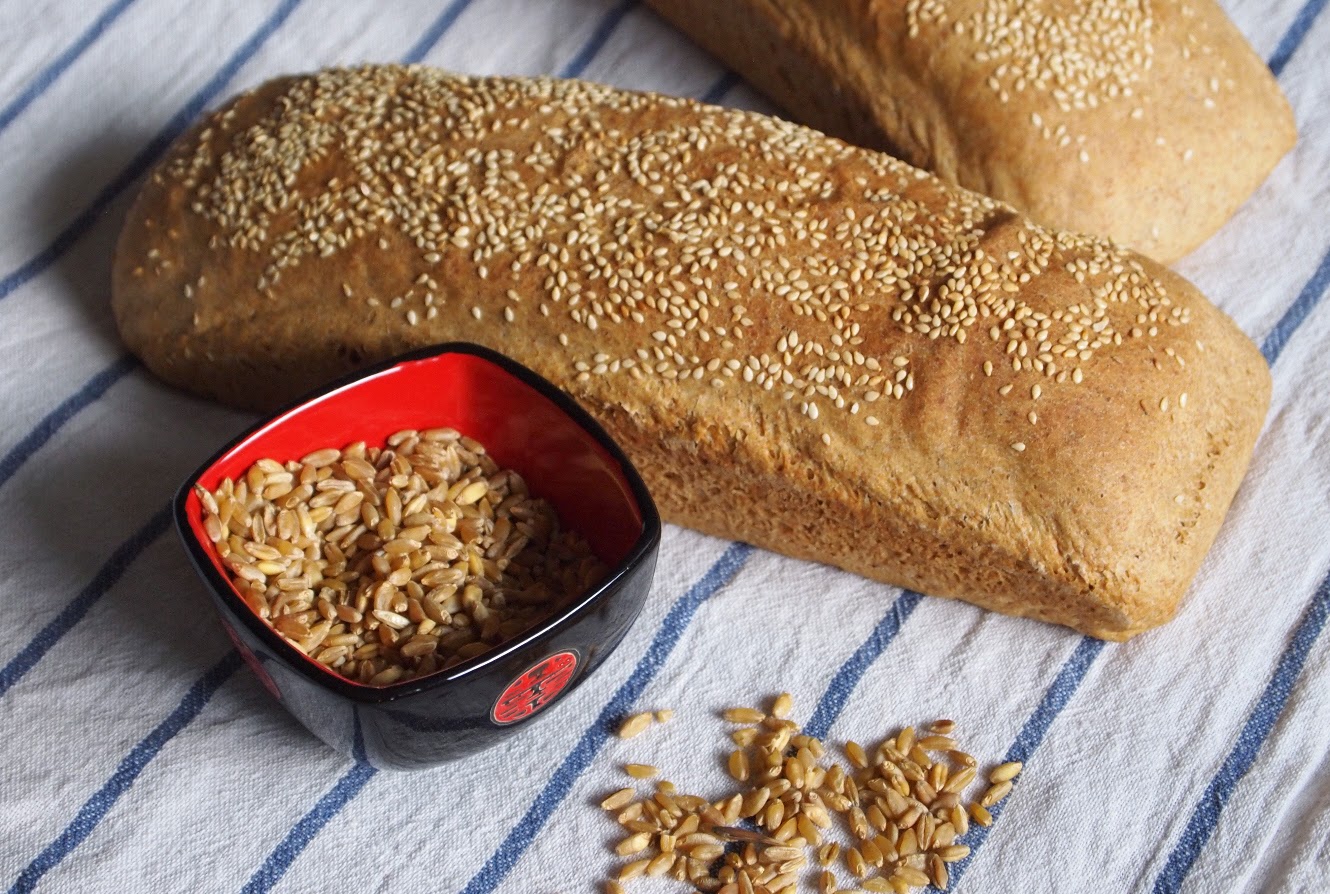
I baked bread with emmer wheat -wild wheat which was traditional for this region in the past and which is becoming popular today with nowadays hype about everything bio and paleo. I used a mild recipe with only 50% emmer and 50% wheat flour.

Ingredients:
  • 250 g emmer flour
  • 250 g white wheat  flour
  • 250 ml lukewarm water
  • 7 g instant dry yeast
  • 3 tbsp olive oil
  • 1 tsp sugar
  • 1/2 tsp salt

I mixed the ingredients, kneaded the dough and left it to rise in the oven at 40C. The dough is brownish and the emmer flour is much coarser and darker than white wheat flour, the dough takes longer to rise.


After the dough had risen enough (for some 80-90 min), I cut it two, kneaded the balls and made two loaves, covered with sesame seeds. This is the second time I'm making this emmer bread and this time I placed the loaves in cake forms. The first time two days ago I baked them as I usually do on a flat baking dish and they spread flat and lost form, so I took precautions this time.


After another hour of rising in the form I turned the oven to 180C and baked the loaves for about 45-50 min.


The taste of the bread is very specific - the other members of the family liked it immediately, but I didn't at first - I've always preferred bread of white wheat flour, enriched with eggs and milk, so liking this more wild taste required for me some adjustment. But on the second day of my first batch of emmer loaves I was surprised to find that I actually liked it better than the industrial wholegrain bread I usually buy.


So I intend to continue my experiments in baking by researching some recipes for cookies with emmer flour and by trying spelt flour too.


Tuesday, March 3, 2015

Bread with Dried Tomatoes


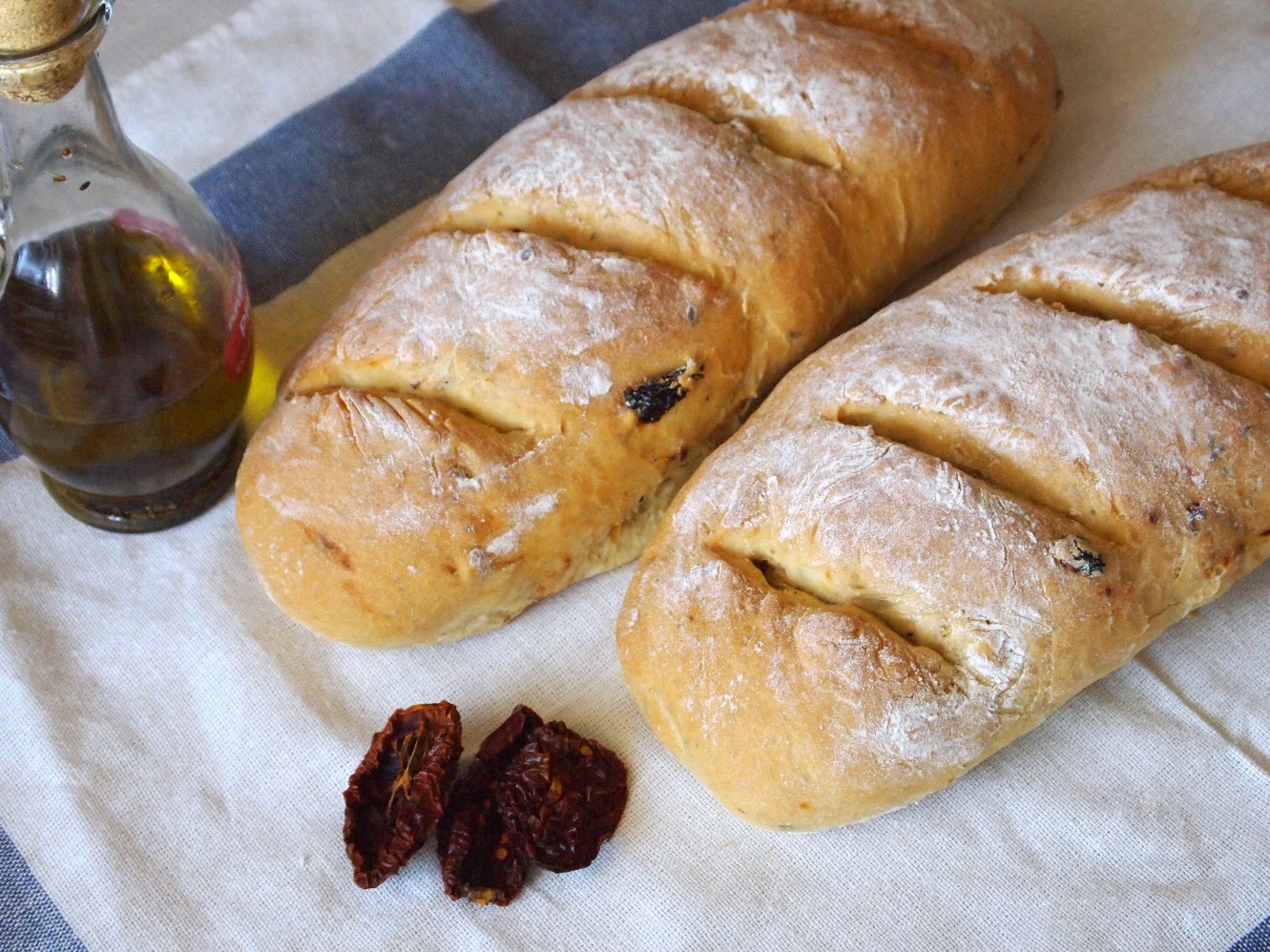
I've been planning to make this bread for centuries and finally I got to it today. It is a very delicious bread with strong Mediterranean flavour, which we all love. Only a couple of minutes ago my son came to me and told me:
- You have to make two loaves next time. It's very delicious and it's almost gone.
- But I did, I did make two loaves. This is the second loaf. We ate the whole first loaf at lunch.
- Then you have to make three loaves next time. :)))

Ingredients:
  • 500 g flour
  • 7 g instant dry yeast
  • 250 ml warm water
  • 1 tsp salt
  • 1 tsp sugar
  • a handful of dried tomatoes, soaked in olive oil
  • 3 tbsp olive oil (from the tomatoes)
  • oregano


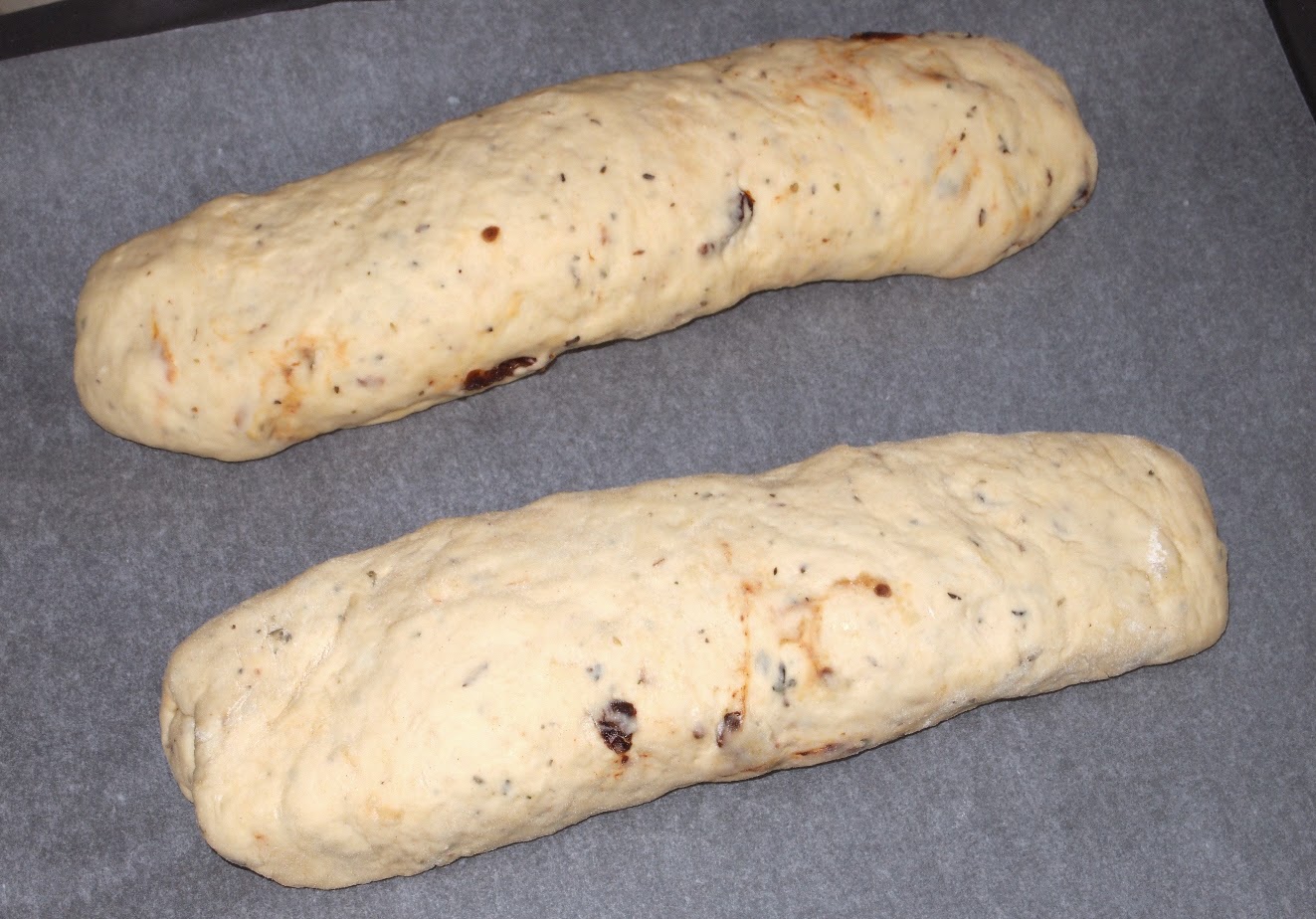
Mix the ingredients in a bowl, knead the dough and leave to rise. I use quick rise - about 45 min in an oven at 40C. After the dough has doubled its volume, cut into two balls, knead and make two loaves. Leave them to rise again in the oven at 40C for about 30 min.


Make deep decorative cuts in the loaves, cover with flour and place in the oven to bake at 180C. When the bread is well baked take it out of the oven and place the loaves on a rack to cool. You can also add cut olives to the dough for even stronger Mediterranean taste.


Saturday, December 13, 2014

Monkey Bread


Most of the recipes for monkey bread on the web and from what I read in Wikipedia regard this bread as a sweet dish. However the same technology can be used to make regular bread and it is really very delicious.
For the dough I used the recipe for bread I've been baking lately: 500 g flour, 7 g instant dry yeast, 1 tsp salt, 1 tsp sugar, 2 tbsp olive oil, 300 ml warm water and 2 tbsp dry spice - for this monkey bread I added dried basil.

I mixed the ingredients, kneaded the dough and cut it into 32 pieces. I rolled roughly each piece in a ball, dipped the ball in olive oil and mixed seeds and placed it in a greased cake pan.


Then I placed the cake pan in the oven at 40C for the dough to rise. In 40 min it had filled the pan.


Then I turned the heat up at 190C and baked the bread for 45 min. Probably because of the olive oil and the form of the cake pan, but this bread has a very delicious crust and lots of it!


32 delicious bites, eaten in no time :)))


Thursday, November 13, 2014

Cheese Pirog


Today's baking was provoked and inspired by this video of pirog making. The talented lady in the video is making a sweet pirog with creamy poppy filling, but I wanted mine to be with cheese. So, this time I decided to improvise the dough and the filling, based on my experience with the last doughs I made.

Ingredients for the dough:
  • 550 g flour + 50 g for the kneading
  • 200 ml warm milk
  • 100 g yogurt
  • 1 egg + 1 white
  • 4 tbsp oil
  • 1 tsp sugar
  • 1 tsp salt
  • 7 g dry yeast


This time I decided not to activate the yeast separately, but instead sifted the flour, made a well in it, added the yeast, a tsp of sugar and the warm milk and left it to activate. In some 20 min added the rest of the ingredients and made the dough. Left it in a warm oven (50C) for an hour to rise, kneaded it and spread it in an ellipse.
For the filling I mixed 250 g white cheese and 150 g sour cream and spiced it with savory, oregano and pepper.
Cut the ellipse, placed the filling and braided it.


I placed the braid again in the warm oven (50C) to rest and rise and in 30 min glazed it with yolk and oil, set the temperature of the oven at 180C and baked the bread until the crust turned golden brown.


It's really very yummy with this creamy filling. Now I'm thinking of other fillings to try with this recipe.